Mimir
A private Linux terminal project, and a case study in choosing a smaller product boundary after a broad first generation became too difficult to reason about.
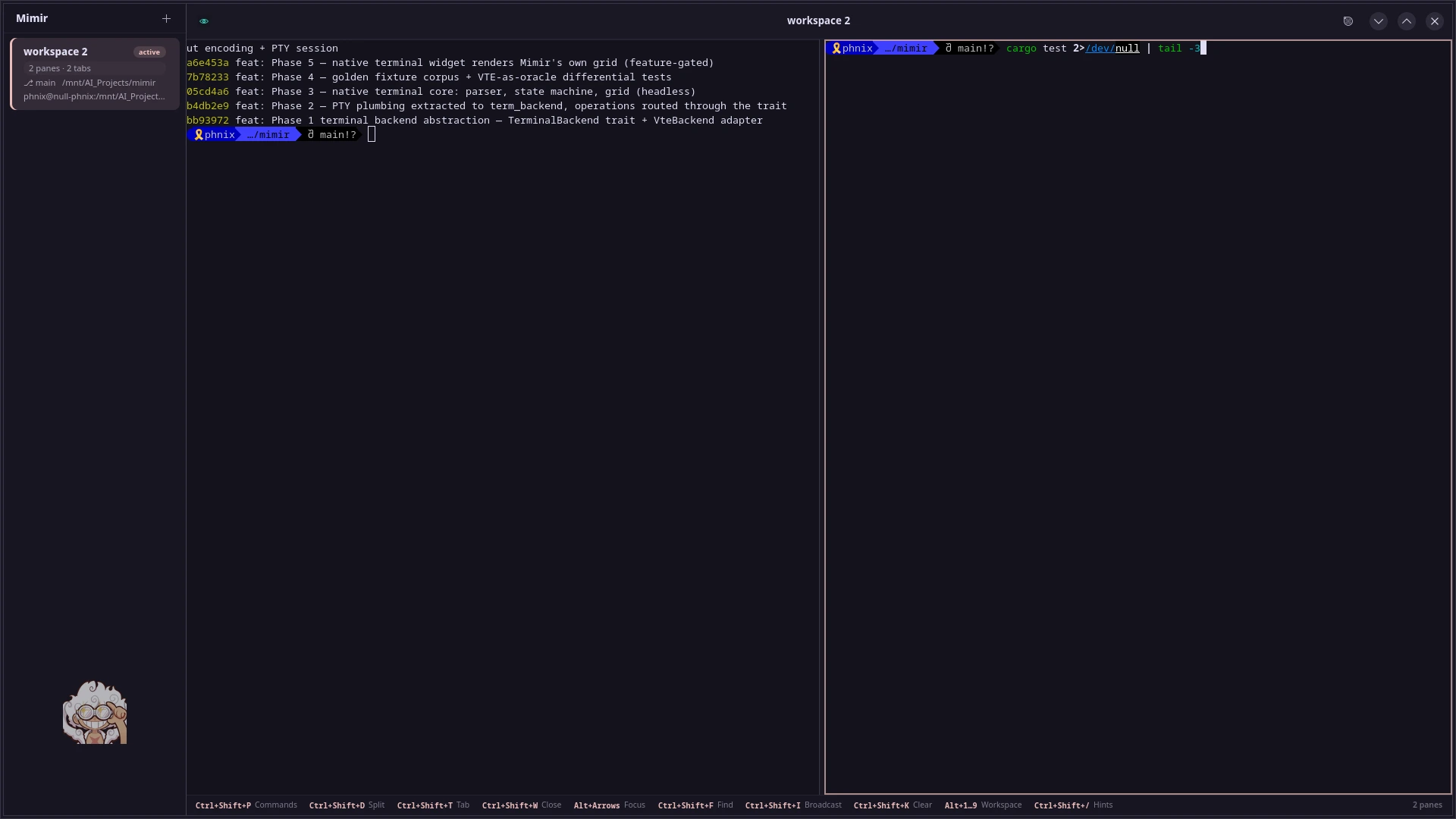
What changed
The first generation grew beyond a terminal into a collection of adjacent product ideas. It produced useful engineering lessons, but the combined surface made it harder to know what the core product needed to do well.
I froze that generation instead of continuing to advertise its feature count. The current Mimir v1 begins with a smaller terminal-first contract and explicit acceptance criteria. Production implementation has not started, so I am not presenting the archived runtime as current progress.
What survives the reset
- The problem: agent-heavy Linux development needs a workspace that is dependable during long sessions.
- The evidence: previous prototypes exposed real interaction and lifecycle problems worth solving.
- The discipline: behavior must be tested at the boundary a user actually experiences.
- The scope rule: adjacent features return only after the terminal product earns them.
Why publish a reset
Portfolios usually preserve the biggest historical numbers and quietly blur what is still real. This page does the opposite. Knowing when to stop, archive, and narrow a system is part of engineering. The valuable proof is not that every experiment shipped forever; it is that I can inspect the result honestly and choose a better next boundary.